- The Fermentalist
- Posts
- Will Microbes Make an Appearance at the Next Met Gala?
Will Microbes Make an Appearance at the Next Met Gala?
Uncovering the science behind bacterial cellulose and its potential to revolutionize fashion with sustainable, bio-engineered materials.

Manya Kadiwala
February 02, 2025 • Estimated Reading Time: 3 minutes
Fermentation has long shaped our food and drink, but could it revolutionize fashion? Researchers are exploring bacterial cellulose—produced by Komagataeibacter xylinus in kombucha SCOBYs—as a sustainable alternative to conventional textiles. Stronger than cotton and biodegradable, this microbial fiber could help address the environmental toll of the textile industry.
Microbial Fabrication: How Bacterial Cellulose is Produced
If you've ever brewed kombucha, you're familiar with the floating biofilm known as SCOBY—a symbiotic culture of bacteria and yeast. While often discarded after fermentation, this gelatinous mass is an abundant source of bacterial cellulose, a highly durable and versatile biomaterial. Unlike plant-derived cellulose from cotton or flax, bacterial cellulose is formed when microbes metabolize sugars into ultra-fine fibrils, creating a dense, leather-like mat.

Kombucha fibre biker jacket designed by Suzanne Lee (left) and other fermented fabric apparel designs. Photo by BioCouture © 2011
Bacterial cellulose is primarily produced by Komagataeibacter xylinus, an acetic acid bacterium that converts simple sugars into cellulose fibrils. Unlike plant-based cellulose, which requires extensive processing to remove lignin and hemicellulose, bacterial cellulose is naturally pure, forming an ultra-fine nanofibril network that provides exceptional mechanical properties, including high tensile strength, flexibility when wet, and superior water retention.
The production process involves fermenting the bacteria in a nutrient-rich medium, where they secrete cellulose fibrils that form a dense, layered film at the liquid-air interface. This biofilm can then be harvested, washed to remove impurities, and processed into various forms depending on the desired application. Treatment methods can further modify the cellulose's properties, allowing it to be made flexible, rigid, or even blended with other materials for enhanced functionality.

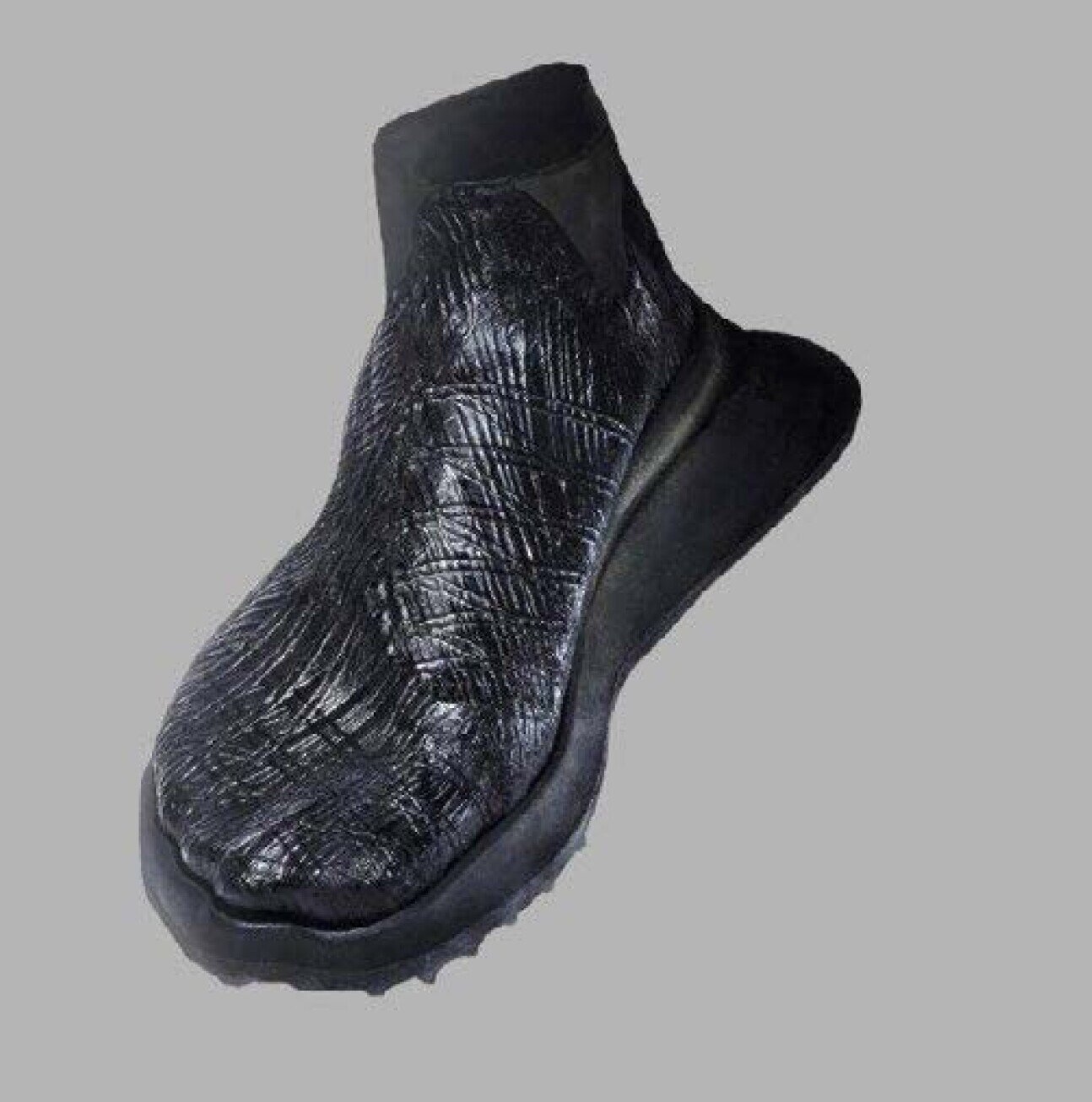
Image of a fermented garment, courtesy of BioAlloy, as featured on CNET.
Advantages of Bacterial Cellulose in Textiles
Because of its purity and mechanical strength, bacterial cellulose has attracted attention as a sustainable alternative to conventional textiles. Unlike cotton, which requires extensive refining, bacterial cellulose is naturally free from impurities, while its nanofibrillar structure enhances durability and tensile strength. It is fully biodegradable, decomposing naturally without contributing to landfill waste, and its production eliminates the need for pesticides, fertilizers, or deforestation. Certain strains of Komagataeibacter xylinus also produce cellulose with inherent antimicrobial properties, making it ideal for medical textiles and odor-resistant fabrics. Additionally, bacterial cellulose readily absorbs dyes and can be shaped during production, allowing for customizable designs in fashion, accessories, and beyond.
Challenges and Considerations for Large-Scale Adoption
Large-scale production of bacterial cellulose faces scalability challenges, including slow growth rates and high resource consumption. The fermentation process requires significant water and energy, particularly for growth and drying. While bacterial cellulose requires fewer chemical inputs than traditional textiles, improving efficiency remains a key focus. Researchers are exploring new bioreactor designs and alternative feedstocks to boost yield. Additionally, while bacterial cellulose is flexible when wet, it can become brittle when dry, prompting efforts to create composite materials that blend it with natural or synthetic polymers for enhanced elasticity and durability.
The Future of Microbial Textiles
Scientists and designers are actively exploring ways to overcome these limitations. Advances in genetic engineering could enhance the efficiency of K. xylinus, making bacterial cellulose production faster and more economical. Additionally, hybrid materials combining bacterial cellulose with silk proteins, alginate, or biodegradable polymers may help bridge the gap between functionality and sustainability.
While bacterial cellulose may not fully replace conventional textiles in the immediate future, its potential as a sustainable material is undeniable. If they succeed, we might one day see a future where clothes and shoes come from sugar and tea.

Davis’ Brenna Berger models a kombucha creation called “Twister”.
The Fermentalist is a reader-supported publication. If you enjoy our content
and want to support cutting-edge discussions in fermentation, biotechnology,
and beyond, consider becoming a free or paid subscriber.
Takeaways
4 takeaways
Biofabrication as a Textile Revolution: The rise of bacterial cellulose highlights the potential of biofabrication in reshaping the textile industry. Moving beyond plant- and petroleum-based fibers, microbial materials could introduce a new era of sustainable, lab-grown fabrics that minimize environmental impact.
Rethinking Waste Streams: Utilizing alternative feedstocks, such as agricultural byproducts, could make bacterial cellulose production more cost-effective and sustainable. This approach not only reduces reliance on traditional sugar sources but also integrates waste valorization into textile manufacturing.
Material Innovation Beyond Textiles: While fashion is a promising application, bacterial cellulose’s unique properties—such as antimicrobial activity and high water retention—position it for use in biomedical, packaging, and wearable technology sectors, expanding its impact beyond clothing.
Challenges as Catalysts for Innovation: The hurdles facing bacterial cellulose, such as scalability and durability, mirror those of other sustainable materials in their early stages. Addressing these challenges could accelerate advancements in bioprocessing, composite materials, and circular fashion systems.
Additional Resources


Thanks for reading The Fermentalist! This post is public so feel free to share it.
Reply