- The Fermentalist
- Posts
- Feeding the World with Gas
Feeding the World with Gas
A magical microbial transformation converts CO2 into proteins and vitamins!

Manya Kadiwala
January 28, 2025 • Estimated Reading Time: 2 minutes
As climate change accelerates, scientists are tapping into the power of microbes to transform CO₂, the main driver of global warming, into valuable resources like protein and vitamins. Imagine making food—not from plants or animals—but from the air we breathe. This revolutionary process could reshape how we tackle food security and sustainability!
The Science of "Air to Protein"
Microbes like acetogenic bacteria and yeast are the stars of this process. These tiny organisms can use CO₂ as a raw material and convert it into acetate, a key building block for making proteins, vitamins, and other valuable products. This is achieved through fermentation processes powered by clean energy, such as wind or solar.
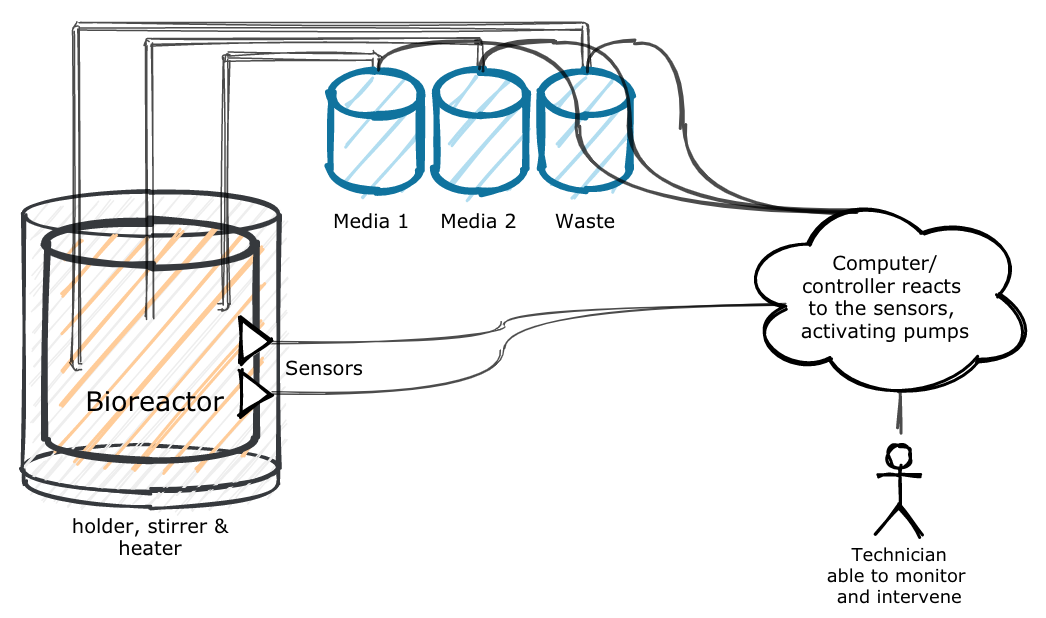
In a groundbreaking system called Power-to-Protein, researchers in Germany designed a two-stage bioreactor where:
Bacteria convert CO₂ into acetate using hydrogen and renewable electricity.
Yeast transforms acetate into protein and vitamin B9, a crucial nutrient.
The result? Just six grams of dried yeast meets your daily vitamin B9 needs, while 85 grams (roughly six tablespoons) provides 61% of your protein requirements—all without using farmland or animal resources.

Setup of the experiment at University of Tübingen ( Lisa Schmitz/University of Tübingen)
Why This Matters
Traditional farming consumes vast amounts of land, water, and energy while contributing to greenhouse gas emissions. Microbial CO₂ conversion eliminates this by producing food in compact bioreactors powered by renewable energy. This not only cuts emissions but also frees up land for reforestation and conservation.
Beyond Food: Chemicals from Air
The same process can make industrial chemicals. Acetogenic bacteria like Clostridium ljungdahlii convert CO₂ into acetate, which can be refined into high-value products like biofuels or biodegradable plastics. Advancements in genetic engineering could soon expand the range of compounds microbes can produce, offering sustainable alternatives to petroleum-based industries.
The Future of Fermenting CO₂
Microbial fermentation of CO₂ offers a unique way to create something out of thin air—literally. From food security to climate solutions, this technology holds immense potential. While challenges like scaling and cost remain, the ability to produce sustainable food and chemicals without depleting natural resources is a game-changer for the planet.
The Fermentalist is a reader-supported publication. If you enjoy our content
and want to support cutting-edge discussions in fermentation, biotechnology,
and beyond, consider becoming a free or paid subscriber.
Takeaways
2 takeaways
From Extraction to Creation: In the past, our industries relied heavily on extracting resources—mining minerals, cultivating vast farmlands, and drilling for fossil fuels. Today, technologies like microbial CO₂ conversion represent a shift toward creating resources from what's already abundant in our atmosphere. This isn't just a scientific breakthrough; it's a paradigm shift in how we approach sustainability.
An exciting future: Looking ahead, the challenge lies in scaling these systems to meet global demand while maintaining efficiency and affordability. As these innovations advance, the vision should shift toward integrating such technologies into circular economies—where waste gases become inputs for food, fuels, and materials. Stay on the lookout for advancements in metabolic engineering and bioprocess optimization, as they will be critical in making air-to-food solutions a mainstream reality.
Additional Resources


Thanks for reading The Fermentalist! This post is public so feel free to share it.
Reply